
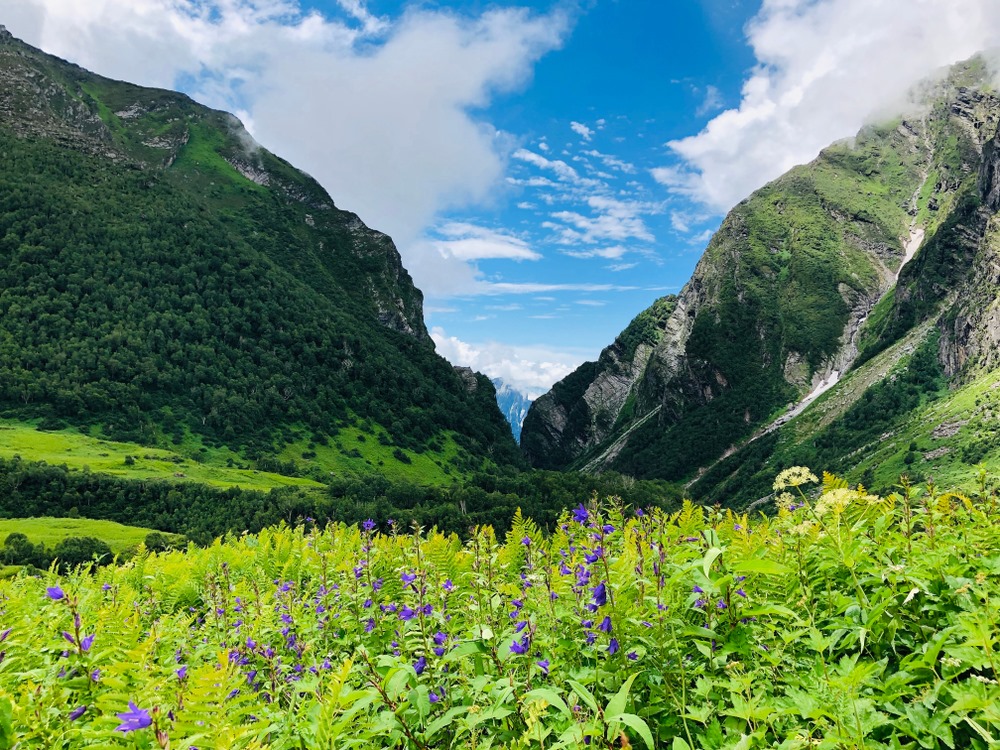
Why the Valley of Flowers Trek Is Unlike Any Other
The Valley of Flowers trek is one of the most visually stunning and scientifically significant treks in India. Located in the Chamoli district of Uttarakhand, inside the UNESCO World Heritage Site of Nanda Devi Biosphere Reserve, this trek leads you into a high-altitude basin blanketed by over 500 species of wildflowers — many of them rare, endemic, and found nowhere else on Earth.
Unlike most Himalayan treks where the payoff is a distant summit, the Valley of Flowers trek rewards you with a living carpet of colour that changes week by week through the monsoon season. Brahmakamal, blue poppy, cobra lily, anemone, primula, and marsh marigold — the diversity here is staggering, and the Valley of Flowers trek altitude of up to 14,100 ft ensures views of glaciers and snowfields framing the meadows on every side.
Whether you are booking a Valley of Flowers trek from Rishikesh or planning a Valley of Flowers trek from Delhi, this guide covers every practical detail — itinerary, cost, best time, difficulty, and how to book a package that ensures a safe, well-supported experience.
Valley of Flowers Trek: Key Facts at a Glance
| Trek Altitude | 14,100 ft (4,298 m) — valley rim viewpoint |
| Valley Altitude | 11,483 ft to 12,500 ft (3,500–3,810 m) |
| Trek Distance | Approx. 37 km round trip (Govindghat to valley and back) |
| Duration | 5 to 6 days (most popular packages) |
| Difficulty Level | Easy — one of Uttarakhand’s most accessible high-altitude treks |
| Starting Point | Govindghat (drive from Rishikesh/Haridwar) |
| UNESCO Status | World Heritage Site, Nanda Devi Biosphere Reserve (1982) |
| Best Season | Mid-July to mid-September (monsoon bloom season) |
| Add-on | Hemkund Sahib Gurudwara — combine easily in the same package |
Best Time for the Valley of Flowers Trek in 2026
The Valley of Flowers trek is a strictly seasonal experience. The valley is covered in snow from October to June and only opens to trekkers between mid-July and mid-September. This is the one trek in India where visiting during the monsoon is not a compromise — it is the requirement. The rains are what trigger the bloom.
Month-by-Month Breakdown for 2026
| Month | What to Expect |
| Mid-July 2026 | Valley opens. First blooms appear — cobra lily, anemone, and marsh marigold dominate. Trails can be muddy but the freshness is unparalleled. |
| August 2026 | Peak bloom season. The widest variety of species is visible simultaneously. This is the most popular window and the Valley of Flowers trek August 2026 slots fill quickly. |
| September 2026 | Bloom begins to thin from mid-September. Brahmakamal — the most sacred flower — is at its peak in early September. Trails are drier and less crowded. |
| Oct onwards | Valley closes. Snow returns. No trekking permitted. |
Expert recommendation: If you can only go once, target the Valley of Flowers trek August 2026 window for maximum floral diversity. If you prefer fewer crowds and the iconic Brahmakamal, the first two weeks of the Valley of Flowers trek September 2026 are the sweet spot.
The Valley of Flowers trek July 2026 opening dates depend on snowmelt — confirm with your operator in May, as exact opening dates vary by 1–2 weeks year to year.
Valley of Flowers Trek Itinerary: Day-by-Day Route Guide
The standard Valley of Flowers trek itinerary follows a well-maintained trail from Govindghat through Ghangaria — the base camp — and then branches to the valley on one side and Hemkund Sahib on the other. The Valley of Flowers trek distance totals approximately 37 km round trip, spread over 5–6 days.
Day-1: Rishikesh to Pipalkoti
- Altitude: 1,340 m/ 4,400 ft.
- Drive Distance: 200 km.
- Driving Time: 9-10 hrs.
Day-2: Drive From Pipalkoti To Govindghat – Pulna and Trek to Ghangaria
- Altitude
Pulna: 2100 m/ 6900 ft.
Ghangharia: 3,000 m/ 9,800 ft. - Drive Distance (Pipalkoti to Govindghat): 52 Km | 2 hours.
- Then Dirve Govindghat to Pulna in Local Union Transport 4km in 15min.
- Trek Distance (Pulna to Ghangharia): 9 km | 4 hours.
Day-3: Ghangaria to Valley of Flower and back to Ghangaria
- Altitude: 3,500 m/ 11,500 ft.
- Trek Distance- 4 km, each way | 7hrs.
Prominent flowers: Blue Poppy, Snake Foil, White Leaf Hog Foot, Himalayan Rose, Meadow Geranium, Dog Flower, Hooked Stick Seed, and River Anemone.
Day-4: Ghangaria to Hemkund Sahib and back to Ghangaria
- Altitude: 4,300 m/ 14,100 ft.
- Trek Distance: 6 km, each way | 8-9 hours.
Day-5: Ghangaria to Govindghat and Drive to Pipalkoti (Badrinath optional)
- Trek Distance (Ghangharia- Pulna): 9 km | 4-5 hrs.
- Drive Distance (Pulna- Govind Ghat): 4km | 15min.
- Drive Distance( Govind Ghat- Badrinath): 25km | 1 hr.
- Drive Distance (Badrinath-Pipalkoti): 75km | 3-4 hrs.
Note:
- GovindGhat to Badrinath is a landslide-prone area in monsoon time so if our leaders find that your safety is at risk due to weather conditions/ landslide or road blockage then we shall skip Badrinath altogether and drive to Pipalkoti directly.
Day-6: Pipalkoti to Rishikesh
- Drive Distance: 200km | 9-10km.
The Valley of Flowers trek with Hemkund Sahib combination is the most popular itinerary. Hemkund Sahib — the world’s highest Gurudwara at 14,100 ft — adds profound spiritual significance to the trek. Most 6-day packages include it as a dedicated day from Ghangaria.
Valley of Flowers Trek Difficulty Level: Perfect for Beginners
The Valley of Flowers easy trek Uttarakhand classification is well-earned. The trail is clearly defined, has no technical climbing sections, and the Valley of Flowers trek distance of 37 km is spread comfortably across 5–6 days. Daily walking distances range from 6–9 km, making this one of the most forgiving high-altitude treks in the Himalayas.
| Who Is This Trek Ideal For? First-time Himalayan trekkers with basic fitnessFamilies with older children (12+) or elderly fit adultsNature lovers, botanists, and wildlife photographersPilgrims combining the trek with Hemkund Sahib visitBudget-conscious trekkers — the Valley of Flowers budget trek is among India’s most affordable UNESCO-site experiences |
Altitude and AMS Awareness
While the main valley floor sits between 11,483–12,500 ft, the Hemkund Sahib day reaches Valley of Flowers trek altitude 14,100 ft. At this height, altitude sickness becomes a real consideration. Spend a full night at Ghangaria before attempting either the valley or Hemkund Sahib, hydrate aggressively, and descend immediately if you experience persistent headache, nausea, or breathlessness.
Valley of Flowers Trek Cost: Package Pricing Guide (2025–2026)
The Valley of Flowers trek cost is relatively modest compared to other UNESCO-registered destinations worldwide. Here is a realistic breakdown for the 2026 season:
| Package Type | Approx. Price (INR per person) |
| 5-Day Budget Package | ₹7,500 – ₹10,000 |
| 6-Day Standard Package | ₹10,000 – ₹15,000 |
| 6-Day Premium Package | ₹15,000 – ₹22,000 |
| Group Booking (8+ persons) | 5–15% discount on standard price |
| With Hemkund Sahib add-on | ₹1,000 – ₹2,500 extra (if not included) |
A standard Valley of Flowers trek package typically includes: Rishikesh pickup and drop (most operators offer Valley of Flowers trek pickup from Rishikesh), accommodation in hotels/tents, all meals on the trail, certified guide, forest permits, and National Park entry fees.
The Valley of Flowers trek price generally excludes personal travel insurance, personal equipment, porter charges beyond a standard baggage limit, and travel to Rishikesh from your home city. When comparing operators for Valley of Flowers trek booking, always review the inclusion list carefully — a headline Valley of Flowers budget trek price may exclude National Park fees or guide costs, which add up significantly.
How to Book Your Valley of Flowers Trek: A Step-by-Step Guide
Booking a Valley of Flowers trek 6 days package for 2026 requires planning ahead — peak season slots in August fill up 6–8 weeks in advance.
- Determine your dates: Decide between July, August, or September 2026 based on your bloom preference and availability.
- Choose a verified operator: Look for operators registered with Uttarakhand Tourism or affiliated with the Indian Mountaineering Foundation. Check reviews on TripAdvisor or Google.
- Compare packages: Check what is included in the Valley of Flowers trek cost — transport, meals, guide qualifications, and permits.
- Book a fixed departure slot: If you are a solo traveler or a small group, a Valley of Flowers trek fixed departure batch is the most cost-effective option. Groups of 8 or more should ask for Valley of Flowers trek group booking rates.
- Complete Valley of Flowers trek online booking: Most operators accept a 25–50% deposit. Pay balance 10–14 days before departure.
- Prepare your kit: Your operator should provide a packing list. Key essentials include a rain poncho (essential in monsoon), waterproof trekking boots, gaiters, trekking poles, and a warm fleece.
Valley of Flowers Trek: Honest Pros and Cons
| ✅ Pros | ⚠️ Challenges to Know |
| UNESCO World Heritage Site — unique globally | Only open mid-July to mid-September |
| 500+ wildflower species in one valley | Monsoon rain makes trails slippery |
| Easy difficulty — ideal for beginners | Ghangaria is the only accommodation hub |
| Combine with Hemkund Sahib pilgrimage | No mobile network beyond Govindghat |
| Lower cost vs. other high-altitude treks | Altitude (14,100 ft) needs acclimatization |
| Government-protected — pristine ecosystem | Mules and crowded trails in peak August |
Expert Tips: How to Get the Most Out of Your Valley of Flowers Trek
On the Trail
- Start from Govindghat by 6:00–7:00 AM on trek days to avoid afternoon rainfall, which is almost guaranteed during peak monsoon
- Bring a field guide to Himalayan flowers or download a plant identification app — the density of rare species makes every halt a learning opportunity
- The Valley of Flowers trek monsoon special experience is precisely the rain: embrace it with proper gear rather than trying to avoid it. Rain-kissed meadows with mist rolling over the peaks are the defining visual memory of this trek
- The inner valley area prohibits camping to preserve the ecosystem — day visits only from Ghangaria base. Do not attempt to stay overnight in the valley.
Gear and Logistics
- Waterproof everything: Pack your clothes and electronics inside dry bags inside your main pack. Monsoon humidity permeates even ‘waterproof’ bags over multiple days.
- Footwear matters more here than almost any other trek: The trail from Govindghat to Ghangaria is paved but steep in places; beyond the gate into the valley it becomes alpine meadow. Waterproof ankle-support boots are non-negotiable.
- Carry emergency cash: No ATMs exist beyond Govindghat. Ghangaria has limited facilities that accept only cash.
- Mule service is available from Govindghat to Ghangaria (approx. INR 700–1,000 per trip) for trekkers who need it — a practical option for families with young children.
Photography and Conservation
Picking flowers, removing plants, or going off-trail is strictly prohibited and can result in fines and ejection from the park. The valley is a living laboratory for ecological research — leave nothing behind except footprints.
Conclusion: The Valley of Flowers Trek Is Worth Every Step
There is no other place in India — and arguably in the world — quite like the Valley of Flowers trek destination. A UNESCO World Heritage Site that functions as both a spiritual corridor (via Hemkund Sahib) and a botanical paradise, it delivers an experience that no photograph fully captures. The combination of 500+ flower species, glacial streams, and high-altitude meadows framed by 6,000-metre peaks creates something genuinely extraordinary.
The fact that this is classified as an easy trek — with a Valley of Flowers trek altitude of 14,100 ft at the Hemkund extension and a round-trip Valley of Flowers trek distance of 37 km spread over 5–6 manageable days — means it is accessible to a far wider audience than most Himalayan treks.
Plan early, choose the right month for your 2026 trip, book a reliable package through a verified operator, and come prepared for the monsoon. Your Valley of Flowers trek will be one of the most memorable things you ever do in the mountains. Lock in your Valley of Flowers trek booking today — the 2026 slots are already moving.
Frequently Asked Questions (Schema-Ready FAQ)
Q: When is the best time for the Valley of Flowers trek in 2026?
A: The Valley of Flowers trek is open mid-July to mid-September each year, and 2026 is no different. August 2026 is the peak bloom month with the widest variety of species. Early September 2026 is ideal for the sacred Brahmakamal flower and fewer crowds. The July 2026 opening window is the freshest experience but trails can be muddier.
Q: How difficult is the Valley of Flowers trek?
A: The Valley of Flowers trek is classified as Easy, making it one of the most accessible high-altitude treks in Uttarakhand. The maximum altitude on the valley floor is around 12,500 ft, with the Hemkund Sahib extension reaching 14,100 ft. Daily distances of 6–9 km and a well-maintained trail mean even first-time trekkers with basic fitness can complete it comfortably.
Q: What is the total cost of a Valley of Flowers trek package?
A: A Valley of Flowers trek cost ranges from approximately INR 7,500 for a 5-day budget package to INR 22,000 for a 6-day premium package. A standard 6-day package with pickup from Rishikesh, meals, camping, guide, and all forest permits typically costs INR 10,000 to INR 15,000 per person. Group bookings of 8 or more often attract 5–15% discounts.
Q: How do I reach the Valley of Flowers trek starting point?
A: The Valley of Flowers trek starts at Govindghat, which is approximately 275 km from Rishikesh and 300 km from Haridwar by road. If you are doing the Valley of Flowers trek from Delhi, take an overnight train or bus to Haridwar/Rishikesh, then board a shared jeep or prebooked vehicle to Govindghat (8–10 hours). Most operators include pickup from Rishikesh in their package.
Q: Can I combine the Valley of Flowers trek with Hemkund Sahib?
A: Yes — combining the Valley of Flowers trek with Hemkund Sahib is the most popular itinerary and is included in most 6-day packages. Both destinations use Ghangaria as the base camp. Hemkund Sahib, the world’s highest Gurudwara at 14,100 ft, is a 6 km round trip from Ghangaria and is typically done on Day 4 of the itinerary. No additional permits are required. https://himalayatrekinn.com/