
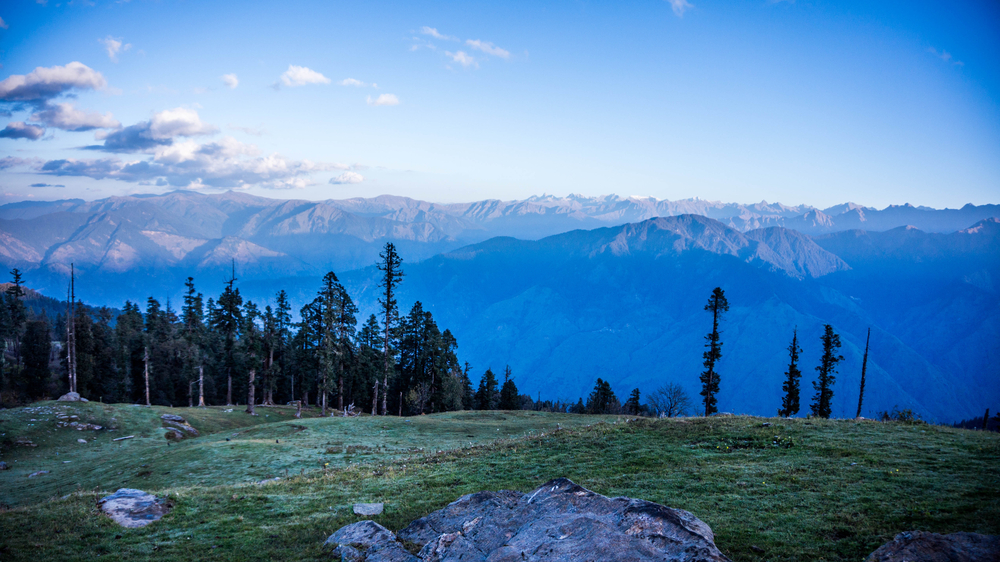
The Phulara Ridge Trek — India’s Most Unique Ridge Walking Experience
The Phulara Ridge trek is one of the most distinctive trekking experiences in the Indian Himalaya — and among the most underrated. Located in the Govind Pashu Vihar National Park in Uttarkashi district, Uttarakhand, this trek is defined by something rare in Himalayan trekking: you do not merely pass through a ridge on the way to a summit. You walk along the ridge for an extended stretch, with open panoramic views on both sides simultaneously. To your left, the Har Ki Dun valley unfolds below. To your right, the Ruinsara Tal and Swargarohini peaks frame the horizon.
The Phulara Ridge trek peaks at 12,345 ft and covers approximately 26 km over 6 days, starting and ending at Kotgaon basecamp near Sankri. It is rated Moderate — accessible to trekkers with reasonable fitness while still delivering a high-altitude Himalayan experience that many harder treks fail to match for sheer visual drama.
Whether you are planning a Phulara Ridge trek from Dehradun, looking for Phulara Ridge trek 2026 packages, or simply trying to understand what makes this Himalayan ridge trek in Uttarakhand stand apart — this guide gives you every fact you need to decide, plan, and book with confidence.
Phulara Ridge Trek at a Glance
| Highest Altitude | 12,345 ft (3,763 m) |
| Total Distance | Approx. 26 km (Kotgaon to Kotgaon loop) |
| Duration | 6 days |
| Difficulty | Moderate |
| Starting Point | Kotgaon basecamp (near Sankri, Uttarkashi) |
| Trek Type | Loop / circuit with ridge traverse |
| National Park | Govind Pashu Vihar National Park |
| Best Season | May–June and September–November |
| Fitness Test | Run 5 km in under 35 minutes |
| Base Cost | From INR 11,450 per person (standard packages) |
What Makes the Phulara Ridge Trek Different from Other Himalayan Treks
Most Himalayan treks follow valley floors, river banks, or glacial moraines, with ridges serving only as brief crossings. The Phulara Ridge trek is built entirely around the ridge itself. For nearly a full day of trekking, you walk the knife-edge meadow crest at altitude — open sky above, dramatic drops on each side, and a horizon stacked with some of the most recognisable peaks in the Garhwal Himalaya: Swargarohini, Bandarpunch, Black Peak, and the Kedarnath range on clear days.
This design creates a Phulara Ridge camping experience unlike almost any other trek in India. Campsites on the ridge itself — particularly at Deodi Thatch — place tents directly on the meadow crest, so you wake up to sunrise views without leaving your sleeping bag. The light on the snow peaks at dawn from 12,000 ft is genuinely difficult to describe and impossible to photograph adequately.
The surrounding Govind National Park protects the ecosystem rigorously, which means wildlife sightings — Himalayan monal, musk deer, and occasionally snow leopard tracks — are a realistic part of the Phulara Ridge trek Uttarakhand experience, not a marketing claim.
Best Time to Do the Phulara Ridge Trek
The best time to do the Phulara Ridge trek falls in two seasonal windows, each offering a fundamentally different experience:
May and June — Spring and Early Summer
This is the premier window for wildflower meadows on the ridge. Rhododendron, primula, and dozens of alpine species bloom across the Phulara ridge line, and snow patches add contrast and drama to the landscape. Temperatures are comfortable during the day (8–18°C on the ridge) and cold at night (0–5°C at camp). The Phulara Ridge fixed departure 2026 slots for May and June are among the most popular of the year.
September and October — Post-Monsoon Clarity
The post-monsoon season delivers the year’s best visibility. The sky is washed clean, views of the Himalayan giants stretch 100+ km, and the ridge trail is dry and stable. October is particularly outstanding — the meadows turn amber and gold, temperatures are crisp, and the trekking conditions are nearly perfect. November is possible for experienced trekkers but brings colder nights and some snow on the upper ridge.
- Avoid July–August: The monsoon makes the ridge trail slippery and dangerous. Operations are suspended by most responsible operators during this window.
- Winter (December–April): The ridge is inaccessible under snow. The trek does not operate during these months.
Phulara Ridge Trek Difficulty Level: Moderate — Here Is What That Means
The Phulara Ridge trek difficulty moderate classification accurately reflects the demands of this route. It is harder than easy treks like Kedarkantha (when conditions are straightforward) but substantially more forgiving than Difficult routes like Bali Pass or Roopkund. The key demands are:
| What Makes This Trek Moderate? The ridge section involves 2–3 hours of exposed walking at altitude with significant drops on both sides — wind exposure is real and requires sure footingDay 3 (ridge traverse day) is the longest and most physically demanding at 10–12 km with 2,500 ft of cumulative elevation changeTotal altitude gain from Kotgaon to the ridge high point is approximately 4,000 ftNights at ridge camps can drop to -2°C to -5°C in September-October, requiring proper sleeping equipmentNo technical climbing, glacier crossing, or special equipment required beyond standard trekking gear |
How Difficult Is the Phulara Ridge Trek — the Fitness Criteria
Most quality operators apply a clear Phulara Ridge fitness criteria: you should be able to run or jog 5 km in under 35 minutes on flat ground before departure. This tests cardiovascular efficiency at sea level, which translates to adequate aerobic capacity at altitude. If you cannot meet this benchmark, extend your training period before booking.
Begin cardiovascular training 6–8 weeks before departure: 30–45 minutes of jogging, cycling, or stair climbing daily. Add weekend hikes with a loaded pack (8–10 kg) on hilly terrain for the final 3–4 weeks. This preparation makes the difference between struggling through the ridge section and genuinely enjoying it.
Phulara Ridge Trek Itinerary: Full 6-Day Day-by-Day Breakdown
The Phulara Ridge trek itinerary follows a loop circuit from Kotgaon basecamp, covering the full Phulara Ridge trek distance 26 km across 6 days including travel from Dehradun.
Day-1: Dehradun – Sankri
- Altitude(Sankri): 1,950m/ 6,400 feet.
- Drive Distance: 200 km (9-10 hrs approx).
Day-2: Sankri – Sikolta
- Altitude(Sikolta): 2850 m/9,400 ft.
- Trek Distance: 7 km | Duration: 5-6 hrs.
- Gradient: Moderate.
- Ascending trail.
- Water Source: Small stream near a broken bridge about 3.5 hrs into the trek
- Stay: In tents, Twin sharing.
Day-3: Sikolta – Bhoj Gadi
- Altitude: 11,100 ft
- Trek Distance: 4-5 km | Duration: 4-5 hrs
- Gradient: Easy to Moderate
- Ascending trail
- Water Source: A stream near a bridge an hour into the trek.
- Prominent Peak Views: Kedarkantha peak, Dhunda top, Lekha Top, Vijay Top, Swargarohini
- Stay: In tents, twin sharing
Day-4: Bhojgadi – Pushtara via Phulara Ridge
- Altitude: Pushtara – 9,500 ft, Phulara Ridge – 12,150 ft.
- Trek Distance: 8.4 km | Duration: 6-7 hrs approx.
- Uphill climb with a flat path on ridge followed by a descent to Pushtara.
- Water Source: No water source. Carry at least 2 liters of water from the Bhojgadi campsite.
- Prominent Peak Views: Bandarpoonch, Kalanag, Sarutal and Hanuman top, Ranglana, Devkyara, Swargarohini, and more.
- Stay in tents, twin sharing.
Day-5: Pushtara – Taluka – Sankri
- Altitude: 6900 ft (Taluka), 6,400 ft (Sankri).
- Trek Distance (Pushtara – Taluka): 8 km | Duration: 5-6 hrs approx.
- Gradient: Easy to moderate.
- Descending trail to Taluka.
- Water Source: A stream just before entering the forest, about 1.5 hrs into the trek.
- Drive Distance (Taluka – Sankri): 12 km | Duration: 1 hr approx.
- Landmarks on the way: Broken Gujjar huts, logging of timber, water tank, Tumrikot Village.
- Stay in a guesthouse , with an attached washroom with running hot water.
Day-6: Sankri – Dehradun
- Drive Distance: 200 km | Duration: 9-10 hrs approx.
Day 4 is the defining day of the Phulara Ridge 6 days trek — a dedicated exploration day at the highest point. You are not rushing to a summit and back. You spend the full day on the ridge: morning photography in golden hour light, afternoon walks along the crest, evening views of the setting sun painting the Swargarohini range. Very few Himalayan treks offer this kind of unhurried time at altitude.
Phulara Ridge Trek Cost and Package Details for 2026
The Phulara Ridge trek cost is transparent with most established operators. The standard Phulara Ridge trek fee INR 11,450 represents the base trek cost charged by several registered operators for the 6-day package. Here is a full pricing overview:
| Package Type | Approx. Price (INR per person) |
| 6-Day Standard Package | INR 11,450 – INR 14,000 |
| 6-Day Premium Package | INR 14,000 – INR 20,000 |
| Group Booking (8+ persons) | 5–12% discount on base price |
| Backpack offloading (porter) | INR 1,200 – INR 1,800 extra per person |
| Trek with transport (Dehradun) | Included in most packages |
| Insurance (evacuation cover) | INR 500 – INR 1,500 additional |
A standard Phulara Ridge trek package includes: Dehradun pickup and drop (operators provide Phulara Ridge trek from Dehradun pickup service), accommodation in tents and guesthouses, all meals on the trail, licensed guide and support staff, and Govind National Park entry permits.
Two critical add-ons to verify: First, Phulara Ridge backpack offloading charges — if you want a porter to carry your main pack, this is usually not included in the base price. Second, Phulara Ridge trek insurance included — confirm whether the package covers emergency helicopter evacuation. Given the moderate altitude (12,345 ft) and ridge exposure, insurance is not optional.
For Phulara Ridge trek from Delhi, plan for an overnight bus or train to Dehradun, then connect with the operator’s vehicle. Most operators can arrange Delhi-to-Dehradun transport at an additional cost if arranged in advance.
How to Book the Phulara Ridge Trek: Step-by-Step Guide
Securing your Phulara Ridge trek booking for 2026 is straightforward, but early action matters — peak season slots (May, October) fill 4–6 weeks ahead.
- Choose your season: May–June for flowers, September–October for clarity. October is the single most recommended month for first-time Phulara Ridge trekkers.
- Verify operator credentials: Check for IMF affiliation or Uttarakhand Tourism registration. Specifically ask about guide certification and group size limits (maximum 12–15 trekkers per batch is a good standard).
- Confirm the Phulara Ridge trek price 2026 inclusion list: Transport, meals, permits, guide, and whether backpack offloading and insurance are included or extra.
- Check the fitness criteria: Can you run 5 km in under 35 minutes? If not, do not book until your training brings you to this benchmark.
- Book a Phulara Ridge fixed departure 2026 slot: Solo trekkers and couples should use fixed departure batches for cost efficiency. For groups of 8 or more, request Phulara Ridge trek group booking rates directly.
- Confirm the pickup arrangement: Most operators using Phulara Ridge trek with transport include Dehradun pickup. Confirm the exact departure point and time when booking.
- Prepare your gear: Follow the operator’s packing list carefully — the section below summarizes the essentials.
Phulara Ridge Packing List: What to Carry and What to Leave Behind
| Category | Essential Items |
| Clothing | Thermal base layer (top + bottom), fleece mid-layer, hardshell waterproof jacket, trekking trousers, warm hat, gloves, sun hat |
| Footwear | Waterproof ankle-support trekking boots (broken in), warm wool socks x 3 pairs, camp sandals |
| Sleeping | Sleeping bag rated to -5°C minimum, liner for extra warmth in October |
| Daypack Essentials | 2L water bottles, energy snacks, sunscreen SPF 50+, lip balm, headlamp with spare batteries, trekking poles |
| Safety & Health | Personal first-aid kit, blister care, rehydration salts, ibuprofen, altitude awareness medication (consult doctor) |
| Documents & Money | Photo ID (Aadhaar/passport), printed permits, cash (no ATMs beyond Sankri), emergency contact card |
Keep your main pack to 12 kg or under — if it exceeds this, use the backpack offloading service rather than over-straining on the ridge section. A comfortable trekker on Day 3 is a trekker who has packed smart.
Phulara Ridge Trek: Honest Pros and Cons
| ✅ Why Phulara Ridge Stands Out | ⚠️ What to Know Before You Go |
| Unique ridge-walking format — views both sides | Only accessible May–June and Sep–Nov |
| Overnight camping directly on the ridge crest | Day 3 is long and demanding (10–12 km) |
| Inside Govind National Park — pristine ecology | No mobile connectivity beyond Sankri |
| Lower footfall than Kedarkantha / Har Ki Dun | Ridge is exposed — wind and cold at night |
| Moderate grade — accessible to fit beginners | Backpack offloading is an extra cost |
| Affordable base cost (from INR 11,450) | Permit process adds time — go through operator |
Conclusion: The Phulara Ridge Trek Rewards Trekkers Who Seek the Extraordinary
The Phulara Ridge trek occupies a unique position in the spectrum of Himalayan trekking. It is not the highest, not the longest, and not the hardest — and that is entirely beside the point. What it offers is a specific, irreplaceable experience: hours of walking a high ridge in the Garhwal Himalaya with uninterrupted 270-degree views, nights camped on the crest itself, and a sense of being genuinely immersed in the mountain environment rather than simply passing through it.
For trekkers who have done easier routes and are ready to step up — or for those seeking something genuinely different from the mainstream Himalayan circuits — the Phulara Ridge trek is the answer. At 12,345 ft, over 26 km and 6 days, with the entire Har Ki Dun valley visible from your campsite, this is one of those treks that stays with you long after the boots are unpacked.
Meet the fitness criteria, choose the right season, book a reputable operator with transparent pricing, and show up prepared. Your Phulara Ridge trek will be everything the ridge promises — and then some. Start your Phulara Ridge trek booking for 2026 today before the best fixed departure slots are gone.
Frequently Asked Questions (Schema-Ready FAQ)
Q: How difficult is the Phulara Ridge trek?
A: The Phulara Ridge trek is rated Moderate in difficulty. It is suitable for trekkers with reasonable fitness — the standard fitness test is the ability to run 5 km in under 35 minutes. The trek covers 26 km over 6 days, peaks at 12,345 ft, and the most demanding day involves 10–12 km of walking with 2,500 ft of elevation change along the exposed ridge. No technical climbing or special equipment is required.
Q: What is the best time to do the Phulara Ridge trek?
A: The best time for the Phulara Ridge trek is May–June for flowering meadows and September–October for post-monsoon clarity and peak visibility. October is the single most recommended month for first-time trekkers: weather is stable, trails are dry, and the views are outstanding. The trek does not operate during July–August (monsoon) or December–April (winter snowpack).
Q: What does the Phulara Ridge trek package cost in 2026?
A: The standard Phulara Ridge trek fee starts from approximately INR 11,450 per person for a 6-day package. Premium packages run INR 14,000–20,000. Most packages include Dehradun pickup and drop, all meals, camping, guide, and national park permits. Backpack offloading (porter) and trek insurance are sometimes additional — confirm these specifics when booking. Group booking discounts of 5–12% apply for groups of 8 or more. https://himalayatrekinn.com/