
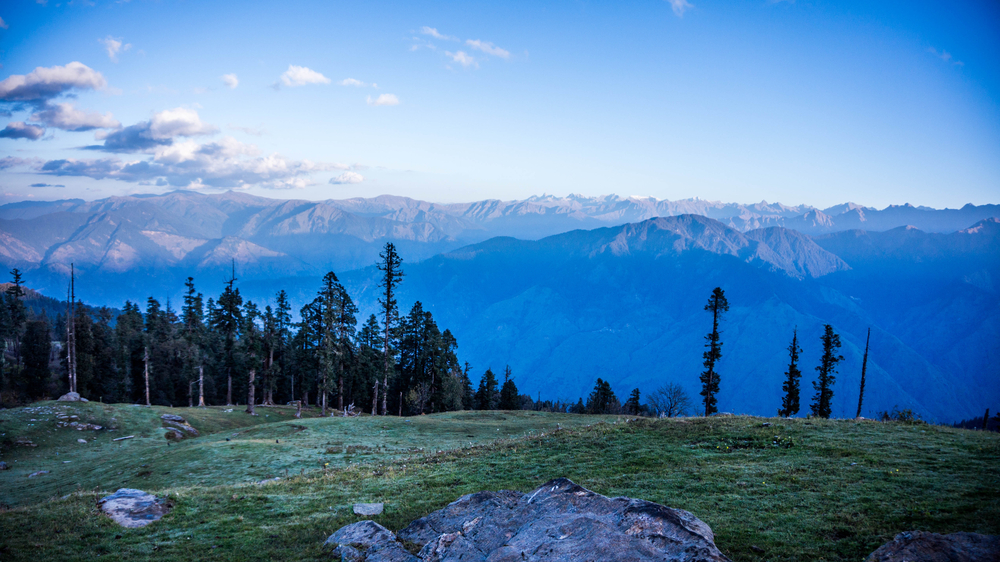
The Brahmatal Trek is widely regarded as the finest winter trekking route in Uttarakhand — a trail that takes you through snow-draped forests and frozen meadows to two stunning high-altitude lakes, Bekaltal and Brahmatal, with Mt. Trishul (7,120 m) and Nanda Ghunti (6,309 m) dominating the skyline throughout. Located in the Chamoli district at a summit altitude of 3,862 metres (12,671 ft), this route offers genuine Himalayan winter immersion without the technical climbing demands of higher-altitude snow routes.
What makes the Brahmatal Trek exceptional is its timing window: December through March, when most Himalayan trails are inaccessible, this route is at its very best. The lakeshores freeze, snow blankets the ridges, and the absence of other trekking groups creates a wilderness experience that the summer Himalaya rarely delivers. This guide provides everything you need — a complete 6-day itinerary, transparent costs, expert packing advice, and a step-by-step booking guide for 2026.
Brahmatal Trek Uttarakhand: Quick Reference
Here is a concise snapshot of the trail’s key parameters before diving into the details.
| Trek Name | Brahmatal Trek (Brahmatal Lake Trek) |
| Location | Chamoli District, Uttarakhand, India |
| Base Village | Lohajung (1,680 m / 5,512 ft) via Rishikesh |
| Summit Altitude | Brahmatal Pass: 3,862 m / 12,671 ft |
| Notable Lakes | Bekaltal (2,935 m) and Brahmatal Lake (3,600 m) |
| Trek Duration | 6 Days (standard package) |
| Difficulty Level | Moderate |
| Prime Season | December – March (winter/snow season) |
| Secondary Season | April–May (spring, snow still present) |
| Distance from Rishikesh | ~210 km (~7–8 hrs drive) |
| Permit Required | Forest Department Permit (via operator) |
| Offloading Option | Available with most operators — mules/porters for personal gear |
Why the Brahmatal Winter Trek Is India’s Best Snow Trek Under 4,000 m
Most Himalayan treks either close completely in winter or require technical mountaineering skills to navigate safely on snow. The Brahmatal Trek occupies a rare middle ground — a trail that is genuinely spectacular in winter conditions and accessible to fit, well-equipped trekkers without crampons, ropes, or ice axes. Here is why it consistently ranks as the leading Brahmatal Snow Trek experience in northern India.
Key Highlights of the Brahmatal Lake Trek
- Two high-altitude lakes in one route: Bekaltal (2,935 m) with its forest reflection, and Brahmatal Lake (3,600 m) partially or fully frozen from December through February.
- Unobstructed views of Mt. Trishul (7,120 m) and Nanda Ghunti (6,309 m) from the summit ridge — among the clearest peak sightlines of any moderate trek in Uttarakhand.
- Dense oak and rhododendron forest heavily loaded with snow from December onwards — a trail that looks like a winter photography set, not a trekking route.
- True winter conditions without technical ice — the gradient and trail design make this the ideal first snow trek for experienced summer trekkers stepping up to winter.
- Moderate difficulty rating means a broad range of trekkers can complete it safely with the right preparation and operator.
- Low trekker density in December–February — the same peaks, same lakes, and the same trail but experienced in near-total solitude.
- Loop-friendly structure — the route can be designed as an out-and-back or extended circuit for experienced groups.
- Lohajung base village offers genuine Garhwali hospitality and a warm acclimatization environment before the snowline.
Brahmatal Trek Itinerary: 6-Day Plan from Rishikesh
The standard Brahmatal Trek 6 days itinerary begins with a drive from Rishikesh and returns to Rishikesh on Day 6. This is the schedule followed by most established operators running Brahmatal Winter Trek fixed departures. Distances and altitude gains reflect actual winter trail conditions where applicable.
Day 1: Rishikesh to Lohajung (210 km drive, ~7–8 hrs | 1,680 m)
Depart Rishikesh by 5:30–6:00 AM. Drive through Devprayag, Rudraprayag, Karnaprayag, and Tharali to reach Lohajung (1,680 m). The drive itself is scenic — the Alaknanda and Pindar river valleys are particularly striking in winter light. Arrive by 2:00–3:00 PM. Rest, acclimatization briefing, gear check, and overnight in guesthouse.
Camp/End Altitude: 1,680 m
Day 2: Lohajung to Bekaltal (7 km, ~4–5 hrs | 2,935 m)
Trek begins through mixed oak and rhododendron forest. The first snowfall is typically encountered within 2–3 km above Lohajung in December. Bekaltal is a forest-ringed lake with exceptional early morning reflections. Camp at the lake. Altitude gain: ~1,255 m — a significant first day that some operators moderate by camping at an intermediate point.
Camp/End Altitude: 2,935 m
Day 3: Bekaltal to Brahmatal (6 km, ~4–5 hrs | 3,600 m)
This is the most visually intense day of the Brahmatal Trek. The trail passes through increasingly deep snow as you ascend toward the Brahmatal Lake basin. Views of Trishul and Nanda Ghunti begin appearing above the ridgeline. Arrive at Brahmatal Lake — frozen and dusted with snow in deep winter. Camp at the lake. Altitude gain: ~665 m.
Camp/End Altitude: 3,600 m
Day 4: Brahmatal Summit (3,862 m) & Return to Brahmatal Camp
Alpine start at 5:30–6:00 AM for the summit push to Brahmatal Pass (3,862 m). The final ridge delivers the full 180-degree panorama — Trishul, Nanda Ghunti, Mrigthuni, and the peaks of the Ali-Bedni Bugyal range. Descent back to camp at the lake. Summit altitude: 3,862 m. Total hiking: ~5 km. Afternoon rest and photography.
Camp/End Altitude: 3,862 m (summit)
Day 5: Brahmatal to Lohajung via Wan Village (11 km, ~5–6 hrs)
Descend via the alternate Wan village route for a complete circuit. This path passes through a different section of forest and offers views back toward the Brahmatal basin. Reach Wan village and drive to Lohajung (~30 minutes). Overnight in guesthouse. Celebration dinner.
Camp/End Altitude: 1,680 m
Day 6: Lohajung to Rishikesh (Return Drive, ~7–8 hrs)
Depart Lohajung early morning. Reach Rishikesh by evening. End of Brahmatal Trek 6 days package. Groups joining the Brahmatal Trek from Delhi via Rishikesh can connect onward the same evening.
Camp/End Altitude: Rishikesh
Brahmatal Trek Cost: Full Pricing Breakdown for 2026
The Brahmatal Trek cost reflects its winter specialisation — operators must equip for temperatures as low as -15°C at camp, provide appropriate sleeping bags, and ensure guides have genuine snow-route experience. Here is a transparent breakdown of Brahmatal Trek package pricing per person for 2026.
Brahmatal Trek Package Pricing Per Person (2026)
| Package Tier | Cost (INR/person) | Key Inclusions |
| Budget Group (8–12 pax) | ₹8,500 – ₹11,500 | Basic tents, veg meals, guide, forest permit |
| Standard Package | ₹12,000 – ₹16,000 | Quality tents, -15°C sleeping bags, all meals, certified guide, first aid kit |
| Premium Package | ₹17,000 – ₹24,000 | Private tents, porter, photography support, oxygen cylinder, warm liners |
| From Rishikesh (All-in) | ₹13,500 – ₹18,000 | Transport from Rishikesh, all meals, camps, permit, guide, return drop |
| With Offloading Option | ₹14,000 – ₹19,000 | Mule/porter for personal bag (up to 9 kg), all standard inclusions |
| With Insurance Included | ₹13,000 – ₹17,000 | Travel insurance covering 4,500 m altitude, standard package inclusions |
Budget Tip: Look for a Brahmatal Trek early bird discount of 10–15% when booking 6–8 weeks ahead of your preferred departure. The most affordable Brahmatal Trek package slots for the January–February window fill by mid-November. Always confirm the Brahmatal Trek cancellation policy in writing before paying — reputable operators offer full rescheduling or 80–90% refund up to 15 days before departure.
Brahmatal Trek Booking: How to Find the Best Operator & Lock In Your 2026 Dates
Booking a winter trek requires more diligence than a summer route. On the Brahmatal Snow Trek, the consequences of a poorly equipped operator — under-rated sleeping bags, inexperienced guides on snow, or absent emergency protocols — are substantially higher than on a summer trail. Here is how to book Brahmatal Trek online safely and smartly.
- Step 1 — Identify Your Ideal Winter Window
January and February offer the deepest snow and most dramatic frozen lake conditions. December is excellent for those wanting snow without extreme cold. March sees slightly warmer nights but the snowpack remains. April–May still has snow at the summit but the lakes begin to thaw. The Brahmatal Winter Trek is at its photographic peak in late January to mid-February.
- Step 2 — Find the Best Brahmatal Trek Operator
Use operators registered with Uttarakhand Tourism. Key questions to ask: Do your guides have specific winter trek certification? What sleeping bag temperature rating do you provide (must be -15°C minimum for January–February)? Do you carry an emergency oxygen cylinder and satellite communicator? Is the Brahmatal Trek with offloading option available if I need it? What is your Brahmatal Trek cancellation policy?
- Step 3 — Verify Insurance and Safety Protocols
Any reputable operator should offer Brahmatal Trek with insurance included as a standard feature or add-on. Confirm the insurance covers helicopter evacuation from high altitude — this is essential for a trek where the nearest hospital is 7–8 hours from the trailhead. Check if the operator’s guides carry a pulse oximeter and stretcher on every departure.
- Step 4 — Book Brahmatal Trek Online
Confirm your departure date with at least 4–6 weeks notice for peak winter slots (January–February fill fastest). Pay 30–40% advance deposit to secure your slot. Request a detailed packing list specific to the departure month — January packing differs significantly from April. Confirm pickup point for Brahmatal Trek from Rishikesh arrangements.
- Step 5 — Physical Preparation
The Brahmatal Trek moderate rating on snow demands more fitness than the same rating in summer. Cold air reduces cardiovascular efficiency by 10–15% at altitude. Train for 6–8 weeks minimum with hill walking, stair climbing, and cardio. Practice walking in layers to simulate the sensation of trekking in heavy winter clothing.
Best Time for the Brahmatal Trek: Month-by-Month Guide
Unlike most Himalayan treks, the Brahmatal Trek rewards those who go in the coldest months. Here is a detailed seasonal breakdown to help you choose the right window.
- December ★★★★☆ First snowfall transforms the trail. Lakes begin to freeze. Cold (-5 to -10°C at camp) but manageable. Good balance of snow drama and accessibility. Fewer crowds than January–February.
- January ★★★★★ Peak Brahmatal Winter Trek season. Brahmatal Lake fully frozen. Deepest snow on the trail. Daytime views are sharpest — cold, dry air maximises visibility. Temperatures at camp: -10 to -15°C. Physically demanding but visually unmatched.
- February ★★★★★ Equally spectacular to January with slightly longer daylight hours. Still full snow cover on the upper trail. One of the busiest months — book early. Best month for the Brahmatal Snow Trek photography experience.
- March ★★★★☆ Snow softens slightly, making trail conditions easier. Lake begins to partially thaw. Still excellent views and significant snow on the upper sections. Less physically intense than January–February.
- April – May ★★★☆☆ Snow remains at altitude above 3,000 m. Rhododendrons begin blooming below. Good spring trek but the frozen lake experience is largely gone. Suitable for those who want some snow without extreme cold.
- June – November ★★☆☆☆ Not the primary season for this route. Summer and monsoon months bring lush greenery but the trail’s signature winter experience is absent. Many operators do not run Brahmatal Trek departures outside the October–May window.
Brahmatal Trek Packing List & Expert Tips for Winter Conditions
Essential Gear for the Brahmatal Snow Trek (December – February)
Winter trekking demands a fundamentally different kit to summer. On the Brahmatal Trek, being under-equipped is genuinely dangerous. Here is what you need for the January–February window specifically:
- Waterproof, insulated trekking boots with -20°C rating (minimum) — non-insulated boots will cause severe cold feet at camp.
- Thermal base layer (top and bottom) — merino wool or high-quality synthetic. Cotton has no place on a winter Himalayan trek.
- Mid-layer: 200-weight fleece or down jacket for active trekking hours.
- Outer layer: windproof, waterproof hardshell jacket and trousers — essential on exposed ridges.
- High-loft down jacket rated to -15°C or below for camp use.
- Sleeping bag rated to -15°C minimum — non-negotiable for January–February. Confirm rating directly with your operator.
- Insulated gloves (inner liner + waterproof outer shell — carry two pairs).
- Wool or synthetic balaclava, warm hat, and neck gaiter.
- Gaiters — essential for walking through deep snow without filling your boots.
- Microspikes or crampons — provided by most operators but confirm in advance.
- Trekking poles — mandatory on snow for balance and knee protection on descent.
- High-SPF sunscreen and UV glacier glasses — snow reflection massively increases UV exposure.
- Personal first aid: Diamox, ORS, ibuprofen, blister kit, hand warmers (chemical).
- Headlamp with lithium batteries — alkaline batteries fail in extreme cold.
Expert Opinion: What Most First-Time Winter Trekkers Miss on Brahmatal
“The Brahmatal Trek catches people in two ways every year. The first is the sleeping bag issue — trekkers arrive with a bag rated to -5°C on a January night that drops to -14°C and spend the night shivering rather than recovering. The second is the altitude gain on Day 2: Lohajung to Bekaltal rises 1,255 metres. On snow, with a loaded pack, this takes longer than people expect. Pace yourself on Day 2 or you will arrive at Bekaltal exhausted before the hardest days. The lake is worth saving your energy for.” — Lead Trek Guide, Chamoli district (10 years running winter departures on the Brahmatal route)
On the booking side, the Brahmatal Trek with offloading option is something more trekkers should use than currently do. Carrying 10–12 kg through knee-deep snow over 1,200 m of altitude gain on Day 2 is the most physically demanding part of the route. Offloading your main bag to a mule or porter allows you to focus entirely on the experience — and keeps your body fresher for summit day.
Brahmatal Trek: Honest Pros & Cons
Pros:
- India’s finest accessible winter snow trek — spectacular frozen lake and peak views without technical mountaineering.
- Two distinct lakes (Bekaltal and Brahmatal) on a single route — exceptional variety for a 6-day format.
- Low crowd density in January–February compared to summer routes on the same mountains.
- Moderate difficulty makes it achievable for fit trekkers with no prior snow experience.
- Lohajung base village — well-serviced, warm, and culturally rich — excellent for pre-trek acclimatization.
- Brahmatal Trek cancellation policy with reputable operators is flexible — important for weather-dependent winter bookings.
- Offloading option available, making the route accessible to a wider fitness range.
Cons:
- Peak winter (January–February) brings severe cold — -10 to -15°C nights demand proper gear that adds significant cost.
- Day 2 altitude gain (1,255 m to Bekaltal) is one of the steepest first-day ascents of any 6-day moderate trek.
- Remote location — nearest hospital is 7–8 hours from Lohajung; emergency evacuation requires a pre-arranged protocol.
- Weather windows can close rapidly in winter — trip delays due to snowfall are possible and require flexible travel plans.
- Budget operators on this route sometimes provide inadequate sleeping bags — always verify the -15°C rating independently.
Getting There: Brahmatal Trek from Rishikesh & Delhi
Lohajung village (1,680 m) is the base camp and trailhead for the Brahmatal Trek. Here are the access routes from the two main departure points.
Brahmatal Trek from Rishikesh
Rishikesh → Devprayag → Rudraprayag → Karnaprayag → Tharali → Dewal → Lohajung. Distance: ~210 km. Drive time: 7–8 hours. Most operators include shared or private vehicle from Rishikesh as part of their all-in Brahmatal Trek package. This is the standard pickup point for all fixed departures.
From Delhi
Delhi → Rishikesh (overnight bus or train, ~6–7 hrs) → Lohajung (~7–8 hrs drive). Total from Delhi: 13–15 hrs. Premium packages include direct AC vehicle from Delhi ISBT with an en-route Rishikesh pickup option for groups joining from different cities.
By Air — Pantnagar or Jolly Grant Airport
Pantnagar Airport (Nainital) is approximately 200 km from Lohajung (~6–7 hrs). Jolly Grant Airport, Dehradun, is approximately 220 km away (~7–8 hrs). Pre-arrange vehicle pickup directly with your trek operator — both routes involve mountain roads that require experienced local drivers, particularly in winter.
Final Verdict: Is the Brahmatal Trek the Right Winter Trek for You in 2026?
If you are a confident summer trekker ready to experience the Himalaya in its most dramatic season, the Brahmatal Trek is the logical next step. No other moderate-rated trail in India puts you beside a frozen alpine lake at 3,600 metres with 7,000-metre peaks in full view, through forests that look designed for a photograph rather than a trail. The Brahmatal Lake Trek delivers all of this in a well-structured 6-day format accessible from Rishikesh in under 8 hours.
The key is preparation: the right operator, the right sleeping bag, the right boots, and the right fitness level. Get those four things right and the Brahmatal Trek will give you one of the most memorable experiences in Indian adventure travel. January and February 2026 slots are now open — book early, ask about the early bird discount, confirm your cancellation policy, and use the offloading option if you need it. The mountain rewards preparation.
Frequently Asked Questions: Brahmatal Trek (Schema-Ready FAQ)
Q1. What is the best time to do the Brahmatal Trek?
The best time for the Brahmatal Trek is January through February for the peak Brahmatal Winter Trek and frozen lake experience. December is excellent for those wanting deep snow without the most extreme cold. March offers slightly softer conditions with significant snow still present on the upper trail. April–May provides a spring snow experience with rhododendron blooms below the snowline.
Q2. What is the Brahmatal Trek cost per person in 2026?
The Brahmatal Trek cost per person in 2026 ranges from approximately ₹8,500 for a budget group package to ₹24,000 for a premium all-inclusive package. A standard 6-day Brahmatal Trek package from Rishikesh with transport, all meals, -15°C sleeping bags, certified guide, and permits typically costs ₹13,500–₹18,000. Packages with the offloading option or insurance included add approximately ₹500–₹2,000 per person.
Q3. Is the Brahmatal Trek suitable for beginners?
The Brahmatal Trek is suitable for fit beginners with no prior snow trekking experience, provided they prepare adequately. The moderate difficulty rating applies to summer conditions — in January–February, the cold, deep snow, and significant Day 2 altitude gain (1,255 m) make it meaningfully more demanding than a typical summer moderate trek. A minimum of 6–8 weeks of cardio and hill training is recommended. Trekkers with knee issues should consult a doctor before booking due to the substantial Day 5 descent.
Q4. What is the Brahmatal Trek cancellation policy?
Cancellation policies vary by operator but reputable companies typically offer: full rescheduling up to 10–15 days before departure, 80–90% refund up to 20 days before departure, and 50% refund up to 10 days before departure. Always confirm the Brahmatal Trek cancellation policy in writing before paying. For a winter trek specifically, also ask about the operator’s bad weather policy — snowstorms can close the trail, and your policy should cover weather-related trip modifications without financial penalty.
Q5. What does the Brahmatal Trek with offloading option include?
The Brahmatal Trek with offloading option means a mule or porter carries your main personal bag (typically up to 8–9 kg) between campsites, while you carry only a daypack with water, snacks, and essential layers. This option significantly reduces the physical strain of the steep Day 2 ascent and snow-route sections. Most operators charge an additional ₹500–₹2,000 per person for this service. It is particularly recommended for first-time winter trekkers and for any trekker with pre-existing back or knee concerns. https://himalayatrekinn.com/