
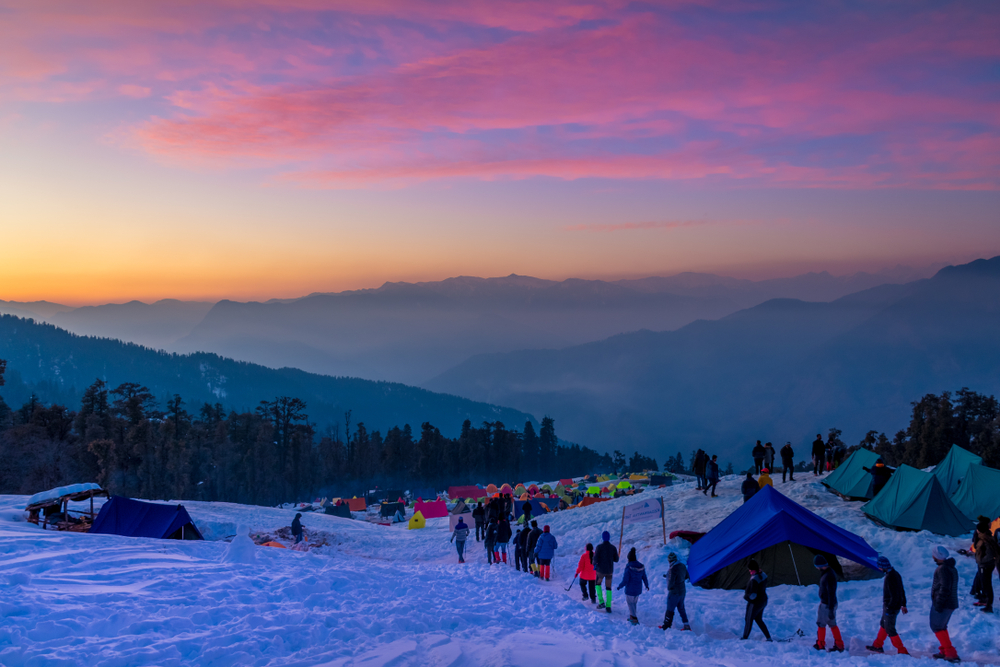
The Kuari Pass Trek is considered one of the finest moderate Himalayan treks in India — a classic high-altitude route through the Nanda Devi Biosphere Reserve that delivers what many veteran trekkers describe as the single best mountain panorama per kilometre of trail in the entire Garhwal Himalaya. Reaching 3,640 metres (11,942 ft) at the pass, this trail in Chamoli district, Uttarakhand, frames a continuous wall of 7,000-metre peaks — Nanda Devi (7,816 m), Dronagiri (7,066 m), Kamet (7,756 m), Chaukhamba (7,138 m), and Hathi-Ghoda — in a way that no other trekking route in northern India replicates.
Originally scouted by Lord Curzon in 1905 (the trail is still sometimes called the Curzon Trail), the Kuari Pass Trek has been a benchmark Himalayan experience for over a century. This guide covers everything for your 2026 trip: a complete day-by-day itinerary, transparent cost breakdowns, package options, the best seasons, expert packing advice, and a step-by-step booking guide. Whether you are trekking from Delhi, Rishikesh, or Haridwar, you will leave with a complete plan.
Kuari Pass Trek Uttarakhand: Key Facts at a Glance
Here is a concise overview of the Kuari Pass Trek before diving into logistics.
| Trek Name | Kuari Pass Trek (Curzon Trail) |
| Location | Chamoli District, Uttarakhand (Nanda Devi Biosphere) |
| Pass Altitude | 3,640 m / 11,942 ft |
| Base Town | Joshimath (1,890 m) or Auli (2,519 m) |
| Total Trek Distance | ~22 km (point-to-point: Auli to Tapovan/Dhak) |
| Trek Duration | 5–6 Days (standard: 6 days with transport from Rishikesh) |
| Difficulty Level | Moderate |
| Best Season | April–June & October–December (winter snow) |
| Distance from Rishikesh | ~250 km (~8–9 hrs drive) |
| Distance from Delhi | ~490 km (~12–13 hrs drive) |
| Permit Required | Forest Department Permit (via operator) |
| Porter/Mule Availability | Yes — from Auli and Dhak villages |
Why the Kuari Pass Trek Has the Best Mountain Views of Any Moderate Trek in India
The phrase ‘best mountain views’ is overused in Himalayan trekking marketing. On the Kuari Pass Trek, it is simply accurate. The trail’s position on the western ridgeline of the Nanda Devi Sanctuary creates a natural amphitheatre effect — as you ascend, the peaks do not peek over distant ridges. They rise directly in front of you, at eye level, across the full visual field. Here is what makes this route exceptional.
Key Highlights of the Kuari Pass Trek
- Unobstructed, simultaneous views of 5+ peaks above 7,000 m from the pass — Nanda Devi (7,816 m), Kamet (7,756 m), Dronagiri (7,066 m), Chaukhamba (7,138 m), and the Hathi-Ghoda peaks.
- Lord Curzon’s historic 1905 route — one of the most storied trekking paths in the Himalaya, combining natural grandeur with genuine exploration history.
- Total distance of approximately 22 km on a point-to-point layout — varied terrain without the repetition of out-and-back trails.
- Tali Lake (3,352 m) — a glacially fed alpine lake that serves as one of the most photographed campsites in Uttarakhand trekking.
- Khullara meadow — a vast high-altitude grassland camp with uninterrupted morning views of the Nanda Devi range.
- Moderate difficulty rating makes it accessible to trekkers with basic fitness and no prior high-altitude experience.
- Winter season transforms the trail into one of India’s premier Kuari Pass Winter Trek and snow trekking experiences (November–December).
- Joshimath and Auli — the base areas — offer world-class ski slopes, hot water springs, and Adi Shankaracharya’s Narsingh Temple for cultural context.
Kuari Pass Trek Itinerary: 6-Day Plan from Rishikesh
The standard Kuari Pass Trek 6 days itinerary begins with a drive from Rishikesh (or Haridwar) on Day 1 and returns by Day 6. Most operators running Kuari Pass Trek fixed departures 2026 use this schedule. Distances are based on actual trail surveys and altitude profiles.
Day 1: Rishikesh to Joshimath (250 km drive, ~8–9 hrs)
Depart Rishikesh by 5:30–6:00 AM. Drive through Devprayag, Rudraprayag, Karnaprayag, and Chamoli to Joshimath (1,890 m). Arrive by 3:00–4:00 PM. Rest, acclimatize, gear check. Overnight in guesthouse. For Kuari Pass Trek from Delhi groups, transit via overnight bus to Rishikesh and connect the same morning.
Camp/End Altitude: 1,890 m
Day 2: Joshimath to Auli (Cable Car / Road) + Trek to Gorson Bugyal (3 km | 3,056 m)
Take the Auli cable car (2,519 m) — the highest gondola in Asia — for an altitude gain with zero effort. Trek through forest to Gorson Bugyal (3,056 m), a wide meadow with first views of the Nanda Devi and Trishul ranges. Camp overnight. Altitude gain: ~540 m.
Camp/End Altitude: 3,056 m
Day 3: Gorson Bugyal to Khullara (7 km | 3,641 m)
A gradual ascent through dense oak and rhododendron forest, breaking into open ridge trails above the tree line. Khullara is one of the most dramatic campsites on any Himalayan moderate trek — a wide meadow directly facing Nanda Devi, Dronagiri, and Kamet. Altitude gain: ~585 m.
Camp/End Altitude: 3,641 m
Day 4: Khullara to Kuari Pass & Descent to Tali Lake (9 km | 3,640 m pass → 3,352 m)
Summit day. Trek from Khullara to the Kuari Pass summit in 2–3 hours. This is the defining moment of the trail — the full 180-degree panorama of the Nanda Devi Sanctuary opens at the pass. Descend via a different route to Tali Lake, a glacially fed alpine lake at 3,352 m. Camp overnight with lake views. Total altitude: pass at 3,640 m.
Camp/End Altitude: 3,640 m (pass)
Day 5: Tali Lake to Dhak Village (5 km descent | 2,100 m)
Descend through mixed forest on a well-graded trail to Dhak village (2,100 m). The descent covers a significant 1,250 m drop — trekking poles are essential. Reach Dhak by early afternoon. Vehicle pickup arranged by operator. Drive to Joshimath or Pipalkoti for overnight stay.
Camp/End Altitude: 2,100 m
Day 6: Joshimath/Pipalkoti to Rishikesh (Return Drive, ~8–9 hrs)
Depart early morning. Arrive Rishikesh by late afternoon or evening. End of the Kuari Pass Trek 6 days package. Delhi-bound groups continue directly to Delhi, arriving by late night.
Camp/End Altitude: Rishikesh / Delhi
Kuari Pass Trek Cost: Transparent Pricing for 2026
The Kuari Pass Trek cost depends on group size, package tier, departure city, and operator quality. Below is a market-based breakdown of Kuari Pass Trek price per person across all categories for 2026, compiled from leading Uttarakhand trekking operators.
Kuari Pass Trek Package Pricing Per Person (2026)
| Package Tier | Cost (INR/person) | Key Inclusions |
| Budget Group (8–12 pax) | ₹8,000 – ₹11,000 | Basic tents, veg meals, guide, forest permit |
| Standard Package | ₹12,000 – ₹16,000 | Quality camps, sleeping bags (-10°C rated), all meals, certified guide, first aid |
| Premium Package | ₹17,000 – ₹25,000 | Private tents, porter, photography support, flexibility, oxygen cylinder |
| From Rishikesh (All-in) | ₹13,000 – ₹18,000 | Transport from Rishikesh included, all meals, permits, guide, camp gear |
| From Delhi (All-in) | ₹15,000 – ₹22,000 | AC transport from Delhi, all meals, camps, permits, certified guide |
| Kuari Pass Winter Trek (Nov–Dec) | ₹14,000 – ₹20,000 | Snow gear (gaiters, microspikes), warm sleeping bag, all standard inclusions |
| Family Package | ₹45,000 – ₹75,000 (group) | Private guide, porter, child-friendly pace, insurance included, flexible itinerary |
Cost Tip: The Kuari Pass Trek early bird offer from most established operators gives 10–15% off when you confirm Kuari Pass Trek 2026 booking open slots before March 15 for the spring season and before July 31 for autumn. Always verify whether Kuari Pass Trek insurance included is part of the package — it should be for any reputable operator at the standard tier and above.
Kuari Pass Trek Booking: How to Secure the Best Package in 2026
Booking the right Kuari Pass Trek package is as important as being physically prepared for it. A well-chosen operator handles permits, emergency protocols, and logistics so you can focus entirely on the trail. Here is a step-by-step process to book Kuari Pass Trek online without cutting corners.
- Step 1 — Select Your Season and Trail Type
April–June for rhododendron blooms and post-snow clarity. October for golden meadows and peak visibility. November–December for the Kuari Pass Winter Trek snow trek package experience. Avoid July–August (monsoon — high landslide risk on the Badrinath highway).
- Step 2 — Shortlist Registered Operators
Only use operators registered with Uttarakhand Tourism Department. Confirm: Are guides WFR (Wilderness First Responder) certified? Is there an emergency evacuation protocol? Does the package include Kuari Pass Trek insurance included as standard? What is the trekker-to-guide ratio?
- Step 3 — Compare Kuari Pass Trek Packages Side by Side
Request itemised quotes from 3 operators. Key comparison points: sleeping bag temperature rating (must be -10°C minimum for this altitude), quality of tents, whether Kuari Pass Trek with transport from Rishikesh is included, and the cancellation policy structure.
- Step 4 — Book Kuari Pass Trek Online
Most established operators support secure online booking for Kuari Pass Trek fixed departures 2026 with 25–35% advance deposit. Confirm your Kuari Pass Trek group departure slot with at least 6–8 weeks advance notice for peak season (May, October). For a Kuari Pass Trek family package, book 3–4 months ahead — private slots fill faster than group departures.
- Step 5 — Complete Pre-Trek Documentation
Valid government ID, medical fitness self-declaration, travel insurance proof (must cover altitude up to 4,500 m), emergency contact details. Some operators require a basic cardiovascular fitness assessment for trekkers over 55.
Best Time for the Kuari Pass Trek: Season-by-Season Breakdown
The Kuari Pass Trek’s elevation of 3,640 m means conditions can shift rapidly. Here is an honest assessment of each season so you can align your trek with the experience you want.
- April – May ★★★★☆ Rhododendrons in full bloom below 3,000 m. Residual snowfields on the pass add drama. Clear pre-monsoon mornings. Ideal for first-timers wanting colour and snow without the full winter commitment.
- June ★★★★★ Best combination of green meadows, stable weather, and visibility. One of the most popular months for Kuari Pass Trek group departure bookings.
- July – August ★★☆☆☆ Monsoon season. Heavy rain, slippery trail, cloud-obscured views. Road to Joshimath is prone to landslides. Not recommended.
- September – October ★★★★★ Post-monsoon perfection. Crisp skies, golden-brown meadows, exceptionally clear views of Nanda Devi. Peak photography season. Highest demand for Kuari Pass Trek fixed departures 2026.
- November – December ★★★★☆ (snow specialists) The Kuari Pass Winter Trek season. Snow covers the upper trail from Khullara onwards. Spectacular but cold (-10 to -15°C at night). Requires proper winter kit and an operator with genuine snow-route experience.
- January – March ★★☆☆☆ Heavy snow may render sections of the trail impassable without specialist gear. For experienced winter mountaineers only. Not suitable for standard packages.
Kuari Pass Trek Packing List & Expert Recommendations
Essential Gear for the Kuari Pass Moderate Himalayan Trek
At 3,640 m with exposed ridge walking on Days 3 and 4, the Kuari Pass Trek moderate classification demands genuine preparation. Here is what experienced Himalayan trekkers consistently recommend:
- Waterproof trekking boots with ankle support and aggressive outsole — icy sections on the pass descent require real grip.
- Three-layer clothing system: moisture-wicking base layer, down or fleece mid-layer, and a waterproof-windproof outer shell.
- Down jacket rated to -10°C or below — Khullara and the pass can experience wind-chill below -15°C even in October.
- Sleeping bag rated to -10°C minimum. Confirm temperature rating with your operator — this is the most frequently under-specified item in budget packages.
- Trekking poles (pair) — the 1,250 m descent from Tali Lake to Dhak on Day 5 is the hardest section on the knees. Poles reduce impact significantly.
- 3-litre hydration system; water purification tablets or UV purifier.
- SPF 50+ sunscreen, UV-400 sunglasses (UV index is extreme on snow-covered terrain above 3,500 m).
- Personal first-aid: Diamox (AMS prevention), ORS sachets, ibuprofen, blister kit, pulse oximeter.
- Headlamp with spare batteries (summit approach may require pre-dawn start).
- Dry bags for electronics and documents — Joshimath to the trailhead road can be wet in spring.
- Winter additions (Nov–Dec): thermal base layers, insulated gloves, wool balaclava, microspikes.
Expert Opinion: The One Thing Most Kuari Pass Trekkers Underestimate
“Everyone talks about the views on the Kuari Pass Trek — and they are truly extraordinary — but nobody talks about Day 5. Descending 1,250 metres from Tali Lake to Dhak village is the hardest section of the entire route, not because of altitude or technical difficulty but because it comes when your legs are already 4 days in. Trekkers who arrive at Dhak with energy to spare have one thing in common: they used poles from Day 3 onwards and resisted the urge to push the pace on summit day. The pass will not run away. Give yourself time on it.” — Lead Trek Guide, Chamoli district (13 years guiding Kuari Pass and Nanda Devi routes)
From a logistics standpoint, always ensure your Kuari Pass Trek with transport from Rishikesh arrangement is confirmed with your operator at least 48 hours before departure. The Badrinath highway, particularly the Chamoli–Joshimath stretch, is subject to traffic blocks from landslides and road construction. Operators with experience in this zone build buffer time into their Day 1 schedule. Those who do not can arrive at Auli in darkness, setting a poor tone for Day 2.
Kuari Pass Trek: Honest Pros & Cons
Pros:
- Kuari Pass Trek best mountain views — 5+ peaks above 7,000 m visible simultaneously from the pass; hard to match anywhere in India.
- Point-to-point 22 km layout creates a journey narrative rather than an out-and-back repetition.
- Moderate difficulty rating with structured altitude gain — well-designed for acclimatization.
- Historical significance (Curzon Trail, 1905) adds genuine exploration context.
- Year-round interest: spring blooms, summer green, autumn gold, winter snow — each season is a different trek.
- Tali Lake and Khullara meadow are among the most photogenic campsites in the Garhwal Himalaya.
- Kuari Pass Trek 2026 booking open now — fixed departures available throughout the year.
Cons:
- Long drive from Rishikesh (8–9 hrs) and Delhi (12–13 hrs) — factor in genuine Day 1 fatigue.
- Monsoon season (July–August) makes the Badrinath highway and trail genuinely dangerous.
- Significant Day 5 descent (1,250 m) demands good knee health — those with prior knee issues should consult a doctor before booking.
- Altitude of 3,640 m at the pass means AMS (altitude sickness) is a real risk for trekkers who skip acclimatization protocols.
- Budget operators on this route sometimes under-spec sleeping bags — vital to verify -10°C rating before departure.
Getting There: Kuari Pass Trek from Delhi & Rishikesh
Joshimath (1,890 m) in Chamoli district is the base town for the Kuari Pass Trek. Here are the main routes from key departure cities.
Kuari Pass Trek from Delhi
Delhi → Haridwar/Rishikesh (5–6 hrs by train or bus) → Devprayag → Rudraprayag → Karnaprayag → Chamoli → Joshimath (~250 km from Rishikesh, ~8–9 hrs). Total from Delhi: 12–13 hrs. Most all-in packages include an AC vehicle from Delhi for overnight travel, arriving Joshimath by morning.
Kuari Pass Trek with Transport from Rishikesh
Rishikesh → Devprayag → Rudraprayag → Joshimath (~250 km, 8–9 hrs). Shared cabs run daily from Rishikesh ISBT. Premium and standard packages include private vehicle pickup from Rishikesh or Haridwar.
By Air to Jolly Grant Airport Dehradun
Fly into Jolly Grant, Dehradun (~300 km from Joshimath, ~9–10 hrs by road). Pre-arrange vehicle pickup with your trek operator. Some premium packages include airport pickup in their Kuari Pass Trek package inclusions.
Final Verdict: Is the Kuari Pass Trek Worth It in 2026?
The Kuari Pass Trek is, without qualification, one of the great trekking experiences in Asia. The combination of a historic route, accessible difficulty, and an unmatched front-row view of the Nanda Devi Sanctuary makes it a pillar of any serious Himalayan trekker’s list. At 22 km with a 3,640-metre summit, it asks enough of you to earn the views — and then rewards that effort at a scale that is genuinely difficult to describe until you are standing at the pass.
With Kuari Pass Trek 2026 booking open now and early bird offer slots filling for the popular May and October fixed departures, this is the moment to commit. Request quotes from registered operators, confirm your Kuari Pass Trek insurance included status, lock in your group departure, and start your training. Lord Curzon knew what he had found in 1905. You will too.
Frequently Asked Questions: Kuari Pass Trek (Schema-Ready FAQ)
Q1. What is the total distance of the Kuari Pass Trek?
The Kuari Pass Trek covers approximately 22 km as a point-to-point route from Auli (via Gorson Bugyal and Khullara) to Dhak village via the pass and Tali Lake. Unlike out-and-back trails, this layout means trekkers experience continuous new terrain across all 5 trekking days, with no repeated sections.
Q2. What is the Kuari Pass Trek cost per person in 2026?
The Kuari Pass Trek cost per person in 2026 ranges from approximately ₹8,000 for a budget group package to ₹25,000 for a premium all-inclusive package. A standard Kuari Pass Trek 6 days package from Rishikesh with transport, all meals, camping gear, certified guide, and permits typically costs ₹13,000–₹18,000. All-in packages from Delhi start at ₹15,000.
Q3. Is the Kuari Pass Trek suitable for beginners?
Yes, with qualification. The Kuari Pass Trek moderate difficulty rating means it is achievable by trekkers with no prior high-altitude experience who have good baseline fitness. The key prerequisites are: ability to walk 8–10 km daily on hilly terrain, no significant knee or cardiovascular issues, and at least 4–6 weeks of dedicated preparation. The structured altitude profile (maximum 3,640 m) also limits AMS risk when proper acclimatization is followed.
Q4. How do I book the Kuari Pass Trek online for 2026?
To book Kuari Pass Trek online, visit the website of a Uttarakhand Tourism-registered operator and browse the Kuari Pass Trek fixed departures 2026 calendar. Compare at least 3 packages on inclusions — specifically sleeping bag temperature rating, whether Kuari Pass Trek insurance included is standard, and the transport arrangement. Confirm your booking with a 25–35% advance deposit. For Kuari Pass Trek group departure bookings of 8+ people, request a group discount at the time of enquiry.
Q5. What is the Kuari Pass Winter Trek experience like?
The Kuari Pass Winter Trek, typically run from November through early December, covers a fully snow-covered trail from Khullara onwards, with the pass and surrounding ridgelines blanketed in 1–2 feet of snow. Views are among the sharpest of any season due to the dry air and low moisture. Temperatures at camp drop to -10 to -15°C at night. Operators running the Kuari Pass Trek snow trek package should provide microspikes, gaiters, and sleeping bags rated to at least -15°C as standard. It is a spectacular experience but demands more rigorous gear and operator selection than the summer season. https://himalayatrekinn.com/